

A planned age-restricted residential community along South Carolina Highway 160 moved a step closer to reality after York County Council unanimously approved the first reading of a condition amendment Monday night, clearing the way for the developer to build the project using a more flexible ownership structure that proponents say will better serve its intended residents.
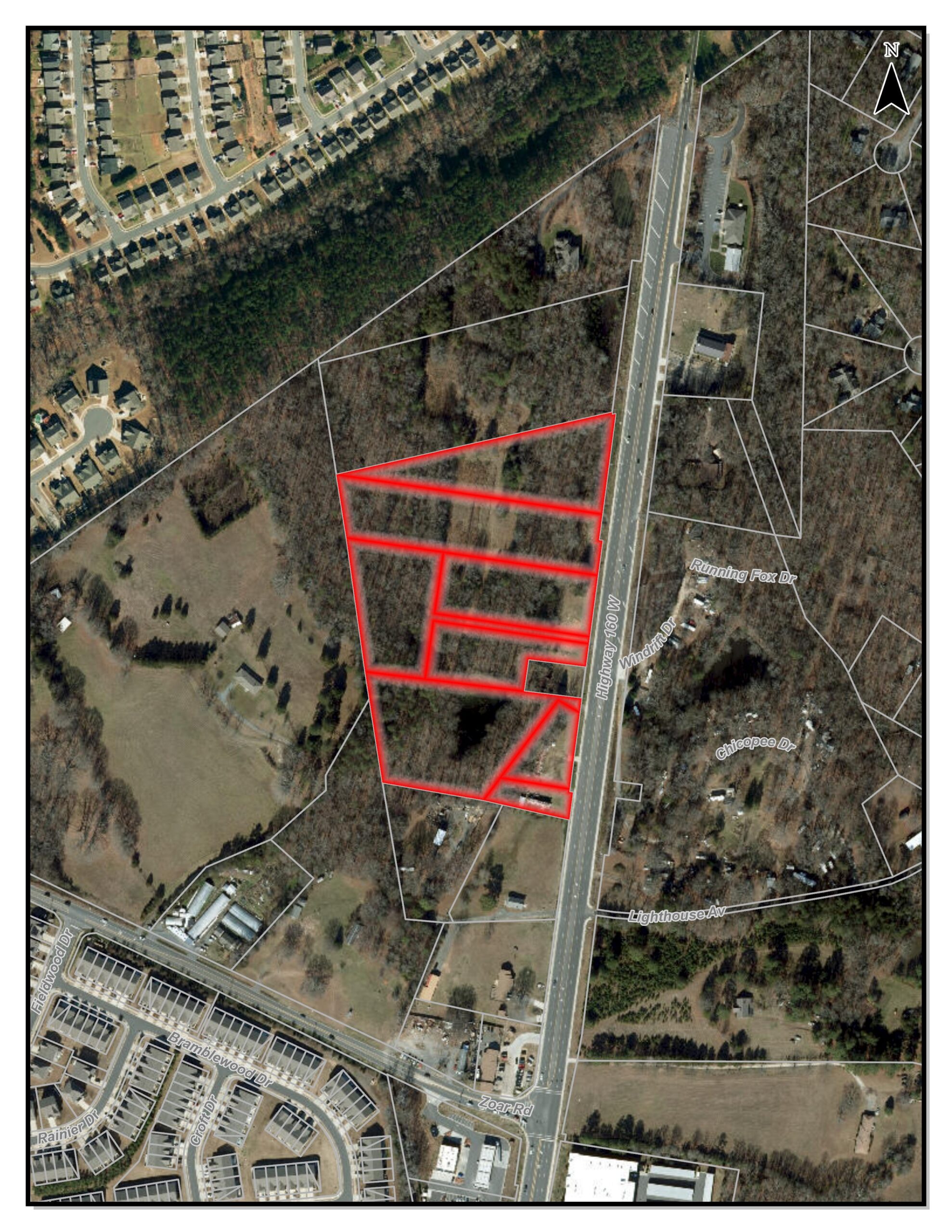
The development, proposed by Stanley Martin Homes, has already received prior county approval for construction of attached residential units on approximately 14 acres off Highway 160 in the northeastern part of the county, near the North Carolina border. Monday’s action did not change the number of units planned or the density of the project. Instead, it addressed a technical but meaningful distinction in how those units will be owned, maintained, and marketed — a change that council members and the applicant said will ultimately benefit the older adults the community is designed to serve.
What Changed and Why It Matters
When the project received its original rezoning approval, the conditions attached to it required that the development be built as an “age-restricted town home community.” Under York County’s zoning ordinance, the word “town home” carries a precise legal definition: each unit must have its own individual lot, including front, rear, and side yard spaces surrounding the building.
Stanley Martin wants to build the community using a condominium-style ownership model instead — one in which the lot is defined as the interior of the unit itself, with no private exterior yard attached to each home. Under this structure, all exterior spaces, landscaping, and common areas would be maintained by the homeowners association rather than individual owners.
Sarah Shirley of Kimley-Horn, representing the applicant, explained the practical significance to council. “The person who owns the town home unit will own the first floor and the second floor if there is a second floor, and that’s the lot itself,” she said. “It’s not an ask for an increase in density. It’s about how the site is laid out.”
The amended condition language would change “age-restricted town home community” to “age-restricted single family attached homes or multifamily units,” preserving the age restriction while removing the requirement that each unit be structured as a traditional town home with its own surrounding lot. The underlying RMX-6 zoning, which governs density and the number of dwelling units per acre, remains unchanged, and the number of homes planned for the site stays essentially the same.
A Better Fit for Older Residents
Both the applicant and a community member who spoke in favor made the case that the condominium ownership model is particularly well-suited for an age-restricted community.
Shirley noted that the HOA-maintained model means residents will not be responsible for maintaining front yards, rear yards, or exterior building elements — a significant quality-of-life consideration for older homeowners who may not want or be able to handle yard work and exterior upkeep. “Instead of having all of the property in HOA maintenance, it would be in private homeowner maintenance and they would be responsible to take care of their own property,” she said, explaining why the current town home structure is less desirable for this population.
Scott Cochenour, a Fort Mill resident who spoke in favor and said he owns properties in retirement communities, reinforced the point from personal experience. He described the practical difference between a town home and a condo from a maintenance responsibility standpoint: in a town home community, a homeowner is responsible for their sewer line until it reaches the road, while in a condo structure, that responsibility shifts to the HOA once the pipe leaves the unit. “Especially in age-restricted neighborhoods, condos are just nice on that type of person,” he told council.
Traffic and Site Design Questions Addressed
Council members raised questions about traffic access to the development from Highway 160, a corridor that has experienced significant congestion as residential development in the area has accelerated in recent years.
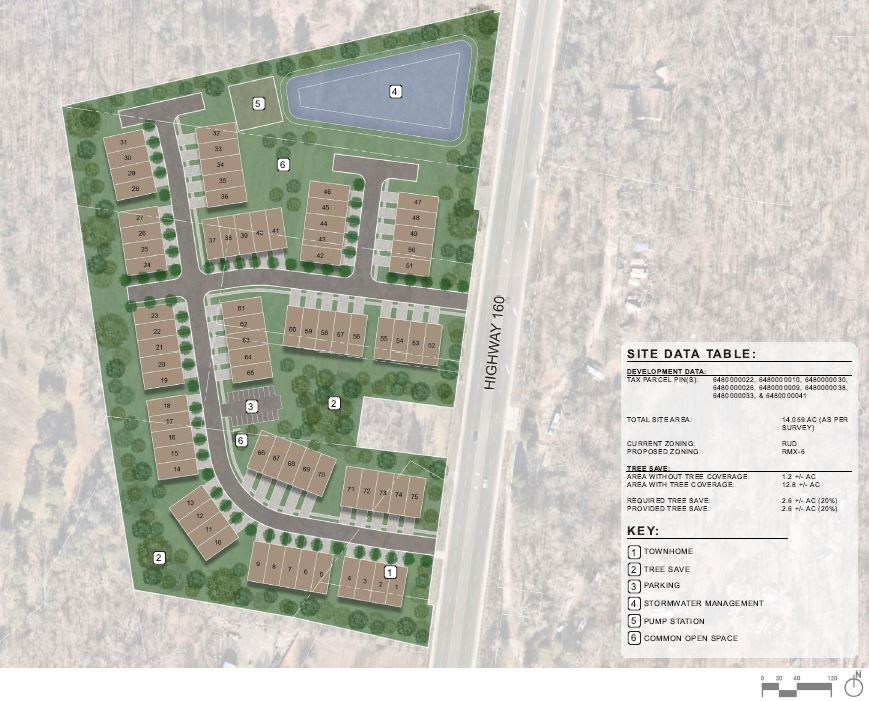
Shirley confirmed that a Tier 2 traffic impact analysis has already been completed and approved by both York County and the South Carolina Department of Transportation. The site plan features a single primary entrance off Highway 160, in front of which SCDOT has approved a two-way center turn lane allowing vehicles to make left turns in both directions. A secondary entrance at the southern end of the property will be gated and used for emergency access only, meaning day-to-day traffic will be consolidated at the single main entrance rather than spread across multiple curb cuts.
One council member who has raised concerns at previous meetings about the proliferation of individual driveway access points onto Highway 160 noted approvingly that the applicant had done considerable work to limit curb cuts, calling it a positive example of how development can be configured to manage traffic more responsibly on a busy arterial road.
Age Restriction Preserved
A key point of clarification during the council discussion was that the age restriction itself is not changing in any way. The amended language retains the requirement that the community be age-restricted, meaning it will continue to qualify as a 55-and-older community under applicable federal housing guidelines. What changes is only the physical and legal structure of how individual units are defined and owned — not who may live there.
Shirley noted that if the zoning code were written differently, this amendment would not even be necessary, because the distinction between a town home and a condo structure would not carry legal weight in the zoning context. The need for the amendment stems entirely from the specific definition of “town home” in the York County zoning ordinance.
Neighborhood Outreach Cited
One council member noted during discussion that the developer had previously met with neighborhoods across Highway 160 from the project to discuss the proposal, and that those conversations had produced positive outcomes. The applicant confirmed the outreach had taken place.
The absence of any opposition speakers at Monday’s public hearing stood in contrast to several other rezoning cases on the agenda that drew significant neighborhood concern. Planning Commission had also unanimously recommended approval of the condition amendment.
What the Community Will Look Like
The project is being built on parcels that currently contain sparse development — described by planning staff as mostly abandoned residences and woodland. The approved site plan, which the applicant said will remain largely unchanged under the new ownership structure, shows a layout with amenities that may shift slightly in placement but with the total number of dwelling units staying at levels already approved under the prior rezoning.
The community is located in a stretch of Highway 160 that has seen significant residential density growth in recent years as the York County panhandle has drawn thousands of new residents. Age-restricted communities have become an increasingly sought-after housing option in the region as the area’s earlier wave of young families ages and as retirees relocate to the Carolinas from higher-cost markets.
What Comes Next
Monday’s vote was the first of three readings required before the condition amendment becomes final. Two additional readings before York County Council remain, giving residents further opportunity to engage with the process. Those with questions about the project can contact York County Planning and Development Services or attend future council meetings when the item returns for second reading.
If the amendment is ultimately approved, Stanley Martin Homes will be able to move forward with the community as designed — offering age-restricted attached housing with HOA-managed exterior maintenance along one of York County’s most active and growing corridors.

Sign up for our Sunday Spectator. Delivered to your inbox every Sunday, with all the news from the week.

Thomas Hyslip lives in Tega Cay with his wife and daughter. After 27 years in the U.S. Army and Federal Law Enforcement, he retired to pursue his passion for teaching. Tom is now an Assistant Professor of Instruction at the University of South Florida. In 2 short years he has won 10 awards from the South Carolina Press Association, including first place in column writing, education beat reporting and best podcast.