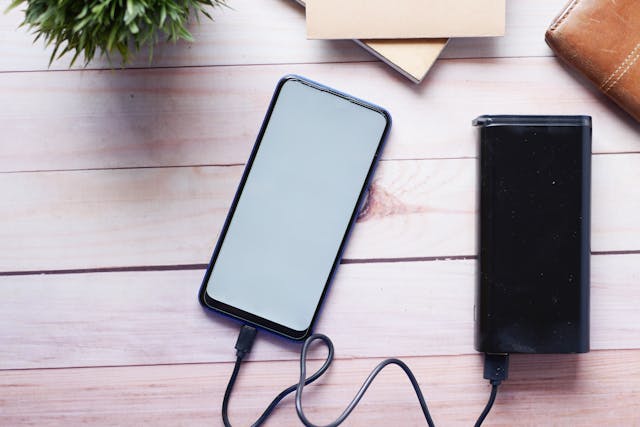
American Airlines will require passengers to keep portable chargers visible and within reach during all flights beginning May 1, 2026, and will ban recharging power banks from onboard seat power, the airline announced April 25.
The new policy also limits travelers to two power banks per person, each rated under 100 watt hours. Power banks stored in overhead bins or buried in carry on bags will not be permitted under the rule. Acceptable storage locations include seatback pockets, tray tables and passengers’ laps.
The change follows a 2025 Federal Aviation Administration safety alert warning that portable chargers stored out of sight in overhead compartments delay crew firefighting response. The FAA reported 97 battery incidents involving smoke, fire or extreme heat on U.S. flights in 2025, up from 89 in 2024. Aircraft fire suppression systems can contain flames but cannot stop thermal runaway, the chemical chain reaction that causes lithium batteries to overheat and ignite. Crew must be able to locate the source immediately to cool it with water.
The policy reduces the number of power banks a passenger can bring from four to two. Passengers may still use power banks to charge phones or laptops during flight, provided the charger remains visible throughout.
Southwest Airlines moved first, implementing near identical restrictions on April 20, one week before American’s announcement. Southwest limits passengers to one portable charger, bans overhead bin storage and prohibits onboard recharging. Southwest had required power banks to be visible while in use since May 2025, making the April 20 update an incremental tightening.
United Airlines has visibility requirements in place for power banks but has not yet matched American’s two charger limit or recharging ban. Delta’s current posture is similar. Industry observers expect the major U.S. carriers to standardize visible power bank rules by mid to late 2026 if American’s policy produces a measurable drop in inflight battery incidents.
International carriers have adopted even stricter standards. Lufthansa does not permit power banks to be used onboard and restricts storage to seat pockets, on passengers or under seats. Singapore Airlines bans both overhead bin storage and inflight use and prohibits charging power banks onboard. Emirates limits passengers to one power bank under 100 watt hours and bans inflight use entirely.
Passengers with American flights departing May 1 or later are advised to verify the watt hour rating printed on each power bank and discard or leave behind any devices exceeding 100 watt hours or any that push the total count above two. Gate agents and flight attendants may visually scan for compliance during boarding and midflight. Noncompliance can result in crew intervention or removal from the aircraft under FAA hazardous materials enforcement rules.

Sign up for our Sunday Spectator. Delivered to your inbox every Sunday, with all the news from the week.

Thomas Hyslip lives in Tega Cay with his wife and daughter. After 27 years in the U.S. Army and Federal Law Enforcement, he retired to pursue his passion for teaching. Tom is now an Assistant Professor of Instruction at the University of South Florida. In 2 short years he has won 10 awards from the South Carolina Press Association, including first place in column writing, education beat reporting and best podcast.