
A rare and often deadly virus that normally spreads from rodents to humans in remote parts of South America has been at the center of an international response after a cluster of cases was identified aboard a Dutch cruise ship in the South Atlantic. Three people have died and eleven cases have been reported across multiple countries, prompting evacuations, quarantines and a Health Alert Network notice from the U.S. Centers for Disease Control and Prevention.
Public health officials in the United States and Europe have repeatedly emphasized that the risk to the general public remains extremely low. Eighteen Americans returned to the United States and are being monitored at the University of Nebraska Medical Center and Emory University in Atlanta, with one confirmed case in the biocontainment unit in Nebraska. For readers wondering what hantavirus actually is, where it is found and what survival looks like, here is what the science and the current outbreak show.
What Happened on the MV Hondius
The MV Hondius, a Dutch flagged expedition cruise ship, departed Ushuaia, Argentina, on April 1 and traveled across the South Atlantic with stops at Antarctica, South Georgia Island, Tristan da Cunha, Saint Helena and Ascension Island. It carried 147 people, including 86 passengers and 61 crew, representing 23 nationalities. Berth prices ranged from 14,000 to 22,000 euros.
On May 2, the World Health Organization was notified of a cluster of severe respiratory illness aboard the ship. By May 13, eleven cases had been reported, including eight confirmed, one inconclusive and two probable, along with three deaths. The virus was identified as the Andes virus, a strain endemic to Argentina and Chile.
The current working hypothesis, according to the WHO, is that the first case acquired the infection on land before boarding, and that subsequent cases resulted from person to person transmission aboard the ship. Genetic sequencing of samples from different patients has shown near identical viral sequences, supporting that theory.
The ship was eventually permitted to dock in Tenerife, in Spain’s Canary Islands, after Cape Verde determined it could not safely handle the evacuation. Passengers have since been repatriated to countries including Australia, Canada, France, Germany, the Netherlands, Saint Helena, Singapore, South Africa, Spain, Switzerland, Turkey and the United States.
What Hantavirus Is
Hantaviruses are a group of more than 50 related viruses that naturally infect rodents and are occasionally transmitted to humans. They were first identified during the Korean War in the 1950s. In the United States, hantavirus pulmonary syndrome first came to wide public attention during a 1993 outbreak in the Four Corners region.
The viruses fall into two broad geographic groups. Old World hantaviruses, found in Europe and Asia, typically cause hemorrhagic fever with renal syndrome, which primarily affects the kidneys. New World hantaviruses, found in the Americas, cause hantavirus pulmonary syndrome, which primarily affects the lungs and heart. The Andes virus, responsible for the current cruise ship outbreak, is a New World hantavirus.
Andes virus has one unusual feature that sets it apart from every other known hantavirus: it is the only strain documented to spread from person to person. Even so, that transmission is rare and requires close, sustained contact. Federal health officials have repeatedly stated it is far less contagious than influenza or other common respiratory viruses.
Where the Virus Is Found
Hantaviruses occur on every populated continent, but the specific strains vary widely by region.
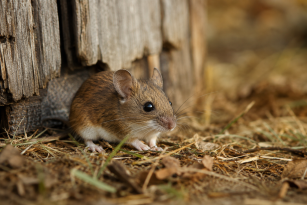
In South America, the Andes virus circulates in Argentina and Chile, where it is carried by the long tailed pygmy rice rat. Other New World strains, including the Sin Nombre virus, are found in North America, particularly in rural areas of the western United States where deer mice live.
In Europe and Asia, Old World strains including Puumala, Dobrava, Hantaan and Seoul viruses cause thousands of cases of hemorrhagic fever with renal syndrome each year. China and South Korea report the largest annual case counts.
The World Health Organization estimates between 10,000 and 100,000 hantavirus infections occur globally each year, with most cases in Asia and Europe. In the United States, the disease is uncommon, with fewer than 50 cases reported in most years.
People typically become infected by breathing in aerosolized particles of rodent urine, droppings or saliva. Cleaning out sheds, barns or cabins where rodents have nested is a recognized risk. There is no evidence the viruses are spread by mosquitoes, ticks or pets.
Symptoms and Course of Illness
According to the CDC and the WHO, symptoms of hantavirus pulmonary syndrome appear anywhere from four to 42 days after exposure, with about two weeks being typical. The illness moves through three distinct phases.
The first phase resembles influenza. Patients develop fever, muscle aches in the thighs, hips, back and shoulders, headache, fatigue, nausea and sometimes diarrhea or abdominal pain. About half of patients also experience gastrointestinal symptoms.
The second phase, the cardiopulmonary phase, develops one to seven days later and can move with alarming speed. Patients experience shortness of breath, fluid buildup in the lungs, irregular heart rhythms, low blood pressure and cardiogenic shock. Many require mechanical ventilation. Most deaths occur during this phase.
The third phase is recovery, which generally takes months. Some survivors report breathing difficulties lasting up to two years.
Treatment and Survival
There is no approved antiviral treatment for hantavirus infection and no licensed vaccine for the strains that cause hantavirus pulmonary syndrome in the Americas. Care is entirely supportive, meaning doctors treat the symptoms and complications rather than the virus itself.
The most effective intervention, according to the University of Florida College of Medicine, is extracorporeal membrane oxygenation, commonly known as ECMO. The technology temporarily takes over the work of the heart and lungs, allowing the body time to recover. According to Dr. Amy Vittor of the UF Emerging Pathogens Institute, ECMO can lower mortality from roughly 50 percent to about 20 percent. Standard intensive care, including mechanical ventilation, fluid management and treatment of shock, also improves survival.
Survival rates vary by virus strain. Old World hantaviruses carry a case fatality rate of 1 to 15 percent. New World hantaviruses are far more dangerous, with case fatality rates that can reach 50 percent even with treatment. For Andes virus specifically, the UK Health Security Agency cites a mortality range of approximately 35 to 50 percent, while published case reports from Chile and Argentina have reported rates between 30 and 44 percent. A clinical review of 16 confirmed Andes virus cases at a Chilean teaching hospital documented a mortality rate of 43.8 percent.
Outcomes depend heavily on how quickly patients reach an intensive care unit. Early recognition, rapid transfer to specialized care and access to ECMO are the most consistent predictors of survival. Older patients and those with other medical conditions tend to fare worse.
Prevention focuses on avoiding contact with rodents and their waste. The CDC recommends sealing homes against rodent entry, using traps rather than sweeping or vacuuming droppings, ventilating enclosed spaces before cleaning and wearing protective equipment when handling potentially contaminated material.
What This Means for Local Readers
For residents of York County and the broader region, the practical risk from this outbreak is minimal. The Andes virus is not present in the United States rodent population, and the CDC has stated that the risk of broad spread to the United States is extremely unlikely.
The North American strains that do circulate locally, primarily Sin Nombre virus carried by deer mice, are not known to spread between humans. The standard advice for reducing risk applies here: keep rodents out of homes, sheds and outbuildings, and use care when cleaning spaces where mice may have been active.
For travelers, the CDC recommends avoiding areas with heavy rodent activity when visiting rural parts of South America, particularly in Argentina and Chile where Andes virus is endemic.
Sources: World Health Organization Disease Outbreak News (May 4, May 8 and May 13, 2026); Centers for Disease Control and Prevention Health Alert Network Health Advisory and Newsroom updates (May 7, May 8, 2026); European Centre for Disease Prevention and Control Threat Assessment Brief (May 6, 2026); University of Florida News, College of Medicine (May 2026); CNN live coverage (May 10 and May 12, 2026); UK Health Security Agency guidance; Castillo et al., CHEST, “Hantavirus pulmonary syndrome due to Andes virus in Temuco, Chile” (2001); Bergamo et al., Open Forum Infectious Diseases case report (2018).

Sign up for our Sunday Spectator. Delivered to your inbox every Sunday, with all the news from the week.

Thomas Hyslip lives in Tega Cay with his wife and daughter. After 27 years in the U.S. Army and Federal Law Enforcement, he retired to pursue his passion for teaching. Tom is now an Assistant Professor of Instruction at the University of South Florida. In 2 short years he has won 10 awards from the South Carolina Press Association, including first place in column writing, education beat reporting and best podcast.