

The Carolinas sit atop the largest share of a newly mapped lithium reserve that federal scientists say could replace more than three centuries of U.S. lithium imports, an announcement that arrived just weeks after a Cleveland County lithium mine roughly 45 minutes from Tega Cay cleared its final federal permitting hurdle.
The U.S. Geological Survey released the assessment April 28, estimating that the Appalachian region contains 2.3 million metric tons of undiscovered, economically recoverable lithium. Of that total, 1.43 million metric tons of lithium oxide is concentrated in the southern Appalachians across the Carolinas, with the remaining 900,000 metric tons in Maine and New Hampshire.
The deposit is valued at more than $64 billion.
Local Connection at Kings Mountain
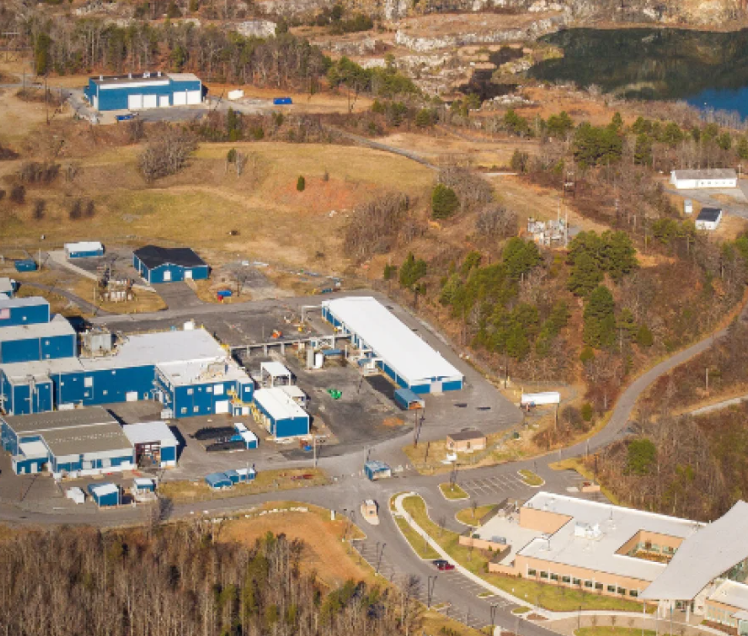
The federal findings carry direct implications for the region just west of York County. The Kings Mountain Lithium Mine in Cleveland County, North Carolina, sits along Interstate 85 about 35 miles west of Charlotte and roughly 30 miles from Tega Cay. The 800 acre Albemarle Corporation site completed federal permitting in late March to resume open pit mining after sitting dormant since the 1980s.
Albemarle has projected that the mine will extract about 420,000 tons annually of lithium bearing spodumene concentrate. The company says it is one of the few known hard rock lithium deposits in the United States.
The restart was made possible in part by a 2023 U.S. Department of Defense agreement to purchase $90 million in lithium from the site, a guaranteed buy that allowed Albemarle to commit to the capital investment required to reopen the operation.
Sen. Ted Budd, R N.C., credited the federal Permitting Council and the Trump administration with clearing the regulatory path.
“By completing the federal permitting process for the Kings Mountain Lithium Mine Project, the Permitting Council has demonstrated how smart, targeted policy can make government a true partner to industry by delivering more predictable timelines and increasing transparency,” Budd said in a statement on the permit.
Federal Officials Frame the Find as Strategic
EPA Administrator Lee Zeldin called the deposit a “great find” during a NewsNation appearance the weekend after the USGS announcement, framing the resource as central to reducing American reliance on China for critical minerals.
USGS Director Ned Mamula tied the findings to a broader push for domestic mineral production.
“This research shows that the Appalachians contain enough lithium to help meet the nation’s growing needs, a major contribution to U.S. mineral security, at a time when global lithium demand is rising rapidly,” Mamula said.
The United States imported more than half of its lithium last year and operated only one active lithium producing mine, factors that placed lithium on the 2025 federal List of Critical Minerals. Australia is the world’s largest lithium producer, followed by China, which dominates global refining.
How the Deposit Was Mapped
USGS geologists combined geologic maps, tectonic history, geochemical sampling, geophysical surveys and records of historic mineral occurrences with a global dataset of lithium pegmatites. From that, they ran simulations to estimate how many undiscovered deposits remain in the study area and how much lithium they likely hold.
The lithium is held in pegmatites, large grained rocks similar to granite that formed more than 250 million years ago when plate tectonics drove Africa, Europe and North America together into the supercontinent Pangea. The intense heat and pressure of that collision melted portions of the deep crust, producing lithium rich magmas that cooled into the deposits being mapped today. Similar formations exist in Ireland and Portugal, regions that once bordered the Appalachians.
The Kings Mountain area was the site of the first large scale lithium pegmatite mining in the United States, and historic operations supplied nearly all of the world’s lithium for about three decades beginning in the 1950s.
Scale of the Resource
The USGS estimates the 2.3 million metric tons of lithium oxide across the Appalachian region would be enough to supply:
- 1.6 million grid scale batteries large enough to stabilize an electric grid
- 130 million electric vehicles
- 180 billion laptops, or a 1,000 year supply at 2025 consumption levels
- 500 billion cellphones, roughly 60 for every person on earth
The figures reflect a 50 percent confidence level, meaning USGS scientists consider it equally likely that the actual recoverable resource is higher or lower than the estimate. The agency reports a 90 percent confidence of at least 90,000 metric tons in the northern Appalachians alone, and a 10 percent probability that as much as 7.4 million metric tons remain undiscovered in that portion of the range.
A detailed southern assessment covering the Appalachians from Maryland to Alabama will be published separately.
What Comes Next
While the USGS findings describe long term geological potential rather than near term production, the Kings Mountain project gives the Carolinas a head start. The Albemarle site already houses a lithium conversion facility that produces about 5,000 metric tons of lithium compounds each year, along with a research and development center, putting the operation closer to renewed production than any other Appalachian site.
A second North Carolina project, Piedmont Lithium in Gaston County, has signed a supply agreement with Tesla but remains in earlier stages of development and has faced local opposition along with state level permitting reviews.
Sources:
- U.S. Geological Survey national news release (April 28, 2026): https://www.usgs.gov/news/national-news-release/lithium-eastern-states-could-replace-imports-a-century-or-more
- USGS scientific paper, Northern Appalachians Lithium Assessment, published in Natural Resources Research: https://link.springer.com/article/10.1007/s11053-026-10652-9
- Albemarle Corporation, Kings Mountain site overview: https://www.albemarle.com/us/en/news/kings-mountain-all-elements-lithium-ecosystem

Sign up for our Sunday Spectator. Delivered to your inbox every Sunday, with all the news from the week.

Thomas Hyslip lives in Tega Cay with his wife and daughter. After 27 years in the U.S. Army and Federal Law Enforcement, he retired to pursue his passion for teaching. Tom is now an Assistant Professor of Instruction at the University of South Florida. In 2 short years he has won 10 awards from the South Carolina Press Association, including first place in column writing, education beat reporting and best podcast.