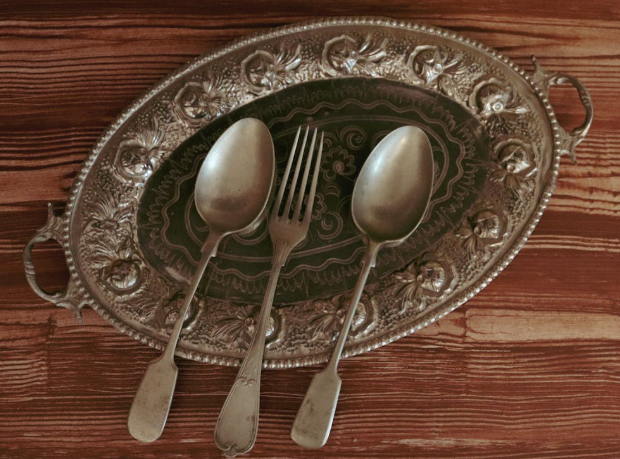
As silver prices recently reached an all time high, I figured it was a good time to get an estimate on the price of one hundred year old flatware that had once been owned by my grandmother. As part of a family with few cherished heirlooms, the set represents more than forks, knives and spoons. It’s a piece of our family history and something my family uses sparingly on holidays and special occasions.
With this in mind, it was doubtful I’d sell the set, but I was curious how much they were worth. Once the set was weighed and fees to the dealer were considered, the value of the silver amounted to $1330. This was less than what I would’ve expected. Part of me was disappointed, the other part was happy not to be faced with a difficult decision.
Would I actually have considered selling if the value was higher?
In short, probably not. I have several objects throughout my house that hold zero value in dollars but huge value in the sentimental department. My wife pokes fun at me occasionally that I’d be a hoarder if given the opportunity. I’m not sure I’d disagree given my propensity to collect things that “mean” something to me on a consistent basis.
How much would it have taken for me to consider selling? To be honest, I’m not sure. I would assume a figure above ten thousand dollars would have given me pause, but I’m still doubtful I’d move forward with a sale. Anything I’d purchase with the money would’ve been tarnished. It would be difficult to enjoy it, almost as though I were a Judas-like figure to my grandmother and a possession she’d held so dear.
Things are just that, things. The price someone is willing to give you to own what you have should exceed whatever attachment you may have to it. This much is true. But what if your attachment isn’t altogether reasonable? Once emotions get involved, the value of something to you may be inflated compared to what it’s actually worth.
This can be seen in any number of items being sold on websites at inflated prices. It’s either this or the people doing the selling are less emotionally reasonable and just unreasonable in what they think something will sell for.
Even though it’s been over forty years since I played, snuggled or slept with any number of stuffed animals in my storage closet, it’s difficult to comprehend parting with any of them. I’ll own the fact that this may be unhealthy. I’ll also revel in the fact that, in keeping them, I’ve been able to share them with my daughter. The joy I once felt has been transferred to my own child. No amount of money can replicate that feeling.
So, what’s to be done? Do we keep every item holding an emotional attachment? Definitely not. The key is determining which items we can part with and when. It’s possible something may hold value at one point in our lives and not in another. I’ve thrown out plenty of items over time that I never thought I’d be able to part with. Enough time had passed where I needed the space, was attempting to declutter or simply no longer cared.
Grandma, I know you’re long gone, but your silverware is safe with me.
For now, at least.

Sign up for our Sunday Spectator. Delivered to your inbox every Sunday, with all the news from the week.