
The Lancaster County Council convened its regular meeting on March 23, 2026, chaired by Brian Carnes, with all seven council members present. The session was dominated by two major themes: the ongoing controversy over the Haven residential development project and a broader reckoning with the county’s strained public safety infrastructure amid rapid growth. Council narrowly advanced the Haven rezoning and development agreement on 4-3 votes, while simultaneously grappling with a county staff analysis showing approximately $2 million in annual ongoing public safety costs that would result from full buildout of developments in the area. A community needs assessment public hearing produced strong calls from citizens and council members alike for affordable housing to become a top county priority. Several operational items were also addressed, including facility planning, a convenience site closure, and boards and commissions appointments.
Citizens Comments
Six residents addressed council during the public comment period, with a consistent thread running through nearly all remarks: Lancaster County’s rapid growth is outpacing its infrastructure, services, and housing affordability.
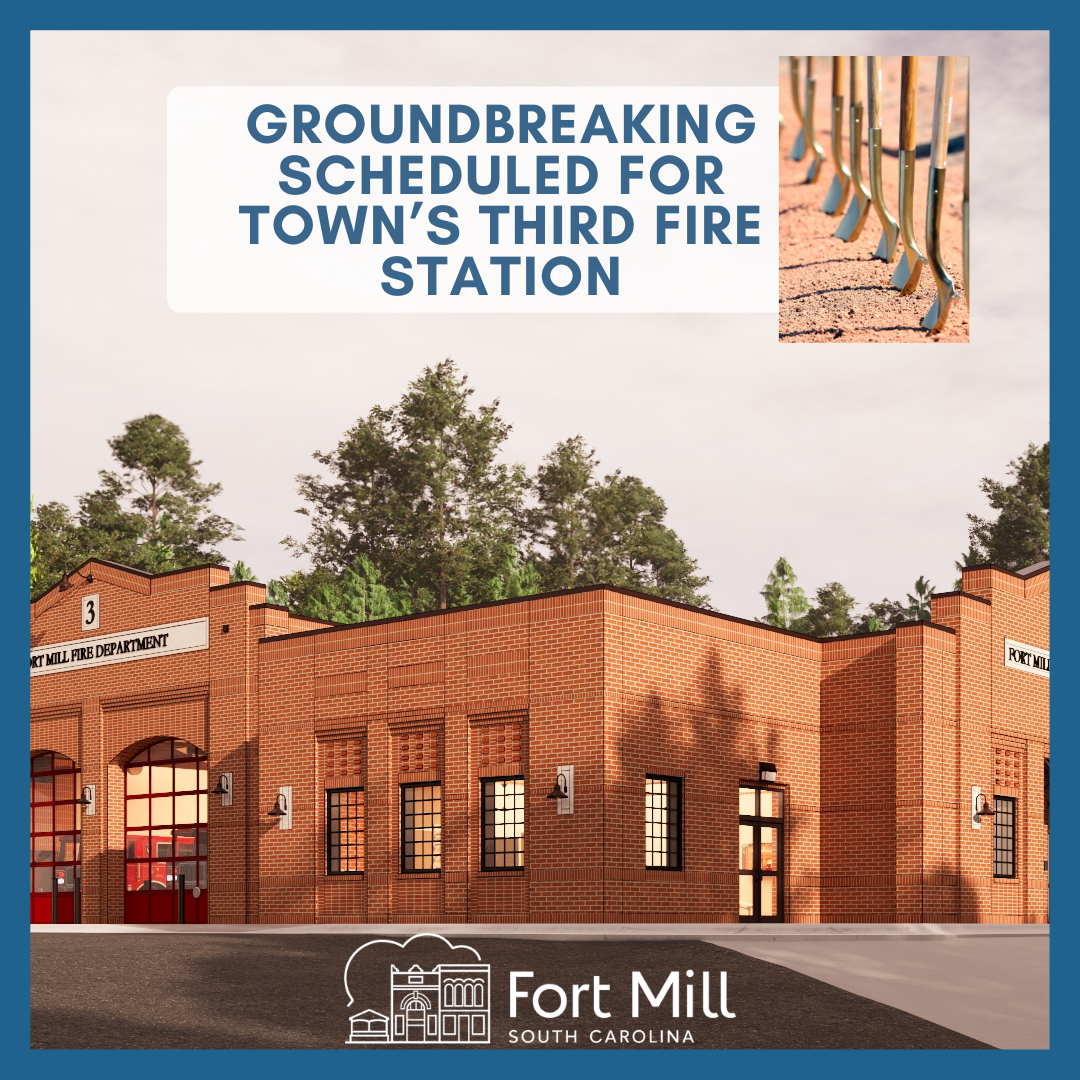
Libby Lambert, a frequent attendee, cited ongoing traffic accidents at the Shiloh Unity and Craig Farm Road intersection — including a serious recent wreck — and expressed frustration that land set aside for a fire station in Indian Land has sat vacant for over a decade despite available funding. She urged council to consider their legacy in shaping growth decisions.
Jane Alford spoke on behalf of the Lancaster County Council of the Arts, presenting an arts integration pilot program at Kershaw Elementary School, a Title One school. The program, which integrates arts into core academic subjects for third graders, is supported by the county and the South Carolina Arts Commission. She described plans to expand the program to fourth grade next year with a goal of scaling countywide.
Jean Doyle, a resident of Treetops, praised council’s honest dialogue at recent Council of the Whole meetings, particularly the acknowledgment from the fire chief and EMS director that services were already insufficient. She noted that Lennar has been generous in its community commitments but that the county must still fund buildings, staff, and equipment. She also noted that land near Treetops designated for an EMS station has sat unused for roughly a decade.
Susan Dolphin, representing Hope in Lancaster, described a record year in which the organization served over 16,000 county residents — more than half of them employed. She relayed the top three requests from Hope’s clients: sustainable employment (not just low-wage service jobs), transportation solutions such as a park-and-ride system, and practical and affordable housing not priced in the $200,000–$500,000 range.
Katie Crosby, a volunteer at Hope and a real estate agent, described residents walking to Hope along Highway 9 without sidewalks and echoed calls for transportation infrastructure, affordable housing, and requiring developers to fund turn lanes and sidewalks as a condition of approval. She also flagged complaints about water quality issues in Indian Land.
Yokima Kuritan, a member of the county planning committee, delivered a prepared statement arguing that growth without planning is “just expensive confusion dressed up as progress.” She cited the Lancaster 2040 Comprehensive Plan, which she said calls for infrastructure and service capacity to lead development decisions, and warned that the county is behind on its Unified Development Ordinance rewrite and impact fees proposal. She noted that the Indian Land panhandle grew by approximately 476 percent and has seen requests for over 8,700 new residential units in the last five years alone.
Four written electronic comments in support of the Haven Development Project were also submitted by David Thunderberg, Greg Gregory, Craig Williams, and Derek Close.
Item 6A: Community Needs Assessment Public Hearing and CDBG Overview
Christine Schwartz from the Catawba Regional Council of Governments presented the annual community needs assessment and Community Development Block Grant (CDBG) program overview. She outlined recent regulatory changes: the requirement for a pre-application public hearing has been eliminated, though a needs assessment hearing is still required, as is a closeout hearing at project completion.
She reviewed the four CDBG funding categories. Community Infrastructure is the largest, with grants up to $1 million, covering water, sewer, roads, and drainage, with applications due April 20th. Community Enrichment grants up to $750,000 are offered in the fall and support economic competitiveness, education and workforce, and safe and healthy communities, including fire and police substations and publicly owned social service facilities. Local Priorities grants up to $300,000 support parks, resilience, and digital divide projects. Ready to Go grants up to $500,000 are for shovel-ready projects. All categories require a 10 percent match and are competitive with no guarantee of funding.
Schwartz then reviewed the current 10-item priority needs list, which covers public facilities upgrades (including fire stations), water and sewer extensions, demolition of dilapidated structures, brownfield clearance, neighborhood revitalization in targeted areas including Emerald Estates, homeless services, economic development and job creation, recreational and social service facilities in the northern panhandle, affordable housing assistance, and fair housing promotion.
Council discussion was robust. Council Member McGriff called for affordable housing to move toward the top of the list and noted the county is forming an affordable housing committee following third reading of the housing ordinance that evening. She also noted past difficulty in getting income surveys returned in Emerald Estates, which is required to qualify certain neighborhoods for CDBG infrastructure funding. Council Member Luis asked for a clearer definition of affordable housing, generally understood as housing affordable at 80 percent or below area median income, and suggested renaming item 10 to “promoting fair housing practices” rather than “fair housing opportunities.” Council Members Graham and Neil both emphasized that economic development and job creation must rank highly. Council Member Mosteller flagged the need for transportation to move up as well. Council was directed to send priority list revisions to Clerk Simpson, with a vote on the updated list scheduled for the next meeting.
Item 7: Consent Agenda
The consent agenda was approved unanimously and included the following items: approval of the March 9, 2026, regular meeting minutes; third reading of Ordinance 2026-2017 establishing a housing committee (passed 7-0 at prior two readings); second readings of ordinances 2026-2023, 2026-2024, and 2026-2025 granting construction and permanent easements to Comporium Communications, Duke Energy Carolinas, and Lancaster County Natural Gas Authority, respectively, on property located off Highway 9 (all passed 7-0 at the March 11, 2026, special meeting).
Item 8A: Third Reading — Permanent Easement to Pressley Family (Grace Avenue)
Council approved on a 6-1 vote (Luis opposed, consistent with prior votes) a permanent easement to Taylor Thornburg Pressley and Jonathan Allen Pressley on county-owned property off Grace Avenue. No members of the public signed up to speak at the public hearing. No changes from prior readings were reported.
Item 8B: Third Reading — Multi-County Park Agreement Amendment (US Strapping Company)
Council unanimously approved an amendment to the master multi-county park agreement between Chesterfield County and Lancaster County to add property associated with US Strapping Company, Inc. Willis noted thanks to council for supporting a local company. No changes from prior readings.
Item 8C: Second Reading — Haven Rezoning (Ordinance 2025-2001)
Council advanced 4-3 the rezoning of approximately 604.56 acres on Charlotte Highway from Rural Neighborhood to Medium Density Residential Cluster Subdivision Overlay. Planning Commission and staff both recommended approval. The prior second reading had been postponed 4-3 in February.
The bulk of the discussion centered on a fiscal impact analysis prepared by county staff following the Council of the Whole meeting. At full buildout of approximately 3,393 residential lots across the Haven and adjacent developments, the area would house an estimated 6,786 residents. Staff projected needs for approximately eight sheriff’s deputies at a cost of roughly $865,000 annually, fire services at approximately $731,000 annually (including a new fire station estimated at $10.9 million capital cost), and one new EMS unit at approximately $361,000 in annual operating costs plus $550,000 in capital. Total estimated ongoing public safety operating costs were approximately $1.957 million annually. Staff noted these figures did not include the coroner’s office or expanded 911 staffing.
Council Member McGriff said she remained unable to support the rezoning without an approved funding plan for these public safety needs. Council Member Luis echoed her concerns, arguing the county lacks a plan even for existing deficiencies, let alone future ones. Council Member Harper pushed back, noting that property tax revenue from new homes has historically kept the county millage flat and that development in the southern part of the county is needed to relieve pressure on Indian Land. Council Member Mosteller suggested that a fire district fee model with full-time firefighters could address needs without a new $10 million fire station. Council Member Graham said his support hinges on seeing concrete capital commitments from council, particularly for fire and EMS infrastructure. The rezoning passed 4-3.
Item 8D: Second Reading — Haven Development Agreement (Ordinance 2025-2002)
Council approved the Haven Development Agreement on a 6-1 vote as amended. The agreement had previously been postponed 4-3. At the meeting, council amended the agreement in three significant ways. First, rooftop fees for public safety were increased: sheriff’s fees from $138 to $1,000 per unit, EMS from $128 to $1,000 per unit, and fire from $1,153 to $2,933 per unit. Parks and recreation fees remained unchanged at $892 per unit. School district fees also remained unchanged at $8,899 per unit. Second, Section 4.01D, which had contained language allowing rooftop fees to fluctuate based on future impact fee studies, was stricken, locking the new fees in as static for the life of the agreement. Third, language was added or amended to incorporate a land donation from the developer for fire and EMS station purposes.
The motion to amend passed unanimously, and the amended development agreement then passed 6-1. Following the vote, Interim Administrator Willis announced that Planning Director April Williams would be departing to become assistant city administrator for the City of Landrum effective April 3rd. Council thanked her for her service.
Item 8E: Second Reading — Budget Amendment (Ordinance 2026-2022)
Council unanimously approved the second reading of a budget amendment to the FY2025-2026 county budget. No changes were reported from the prior reading.
Item 8F: First Reading — Gas Authority Easement on Harrisburg Road (Ordinance 2026-2026)
Council unanimously approved the first reading of an ordinance granting a temporary construction and permanent easement to Lancaster County Natural Gas Authority on county-owned property off Harrisburg Road. Willis explained that during a recent cold snap, staff had to manually adjust gas valves in the area to maintain pressure. The easement will allow construction of a high-pressure gas line and a new substation to serve the growing area. The project will not adversely impact Indian Land Fire Rescue, as it will be sited near an existing Carolina substation.
Item 9A: Fleet/IT Facility Scope of Work
Willis presented an updated cost estimate for the renovated Fleet and IT building, formerly the Burns building, originally budgeted at approximately $950,000. The revised estimate came in at approximately $3.4 million, drawing significant skepticism from council. Council Member Harper said he could not support a project of that scope for a back-office building. Council Member Mosteller questioned the architectural fees, which had grown to approximately $268,000 including prior expenditures. Fleet Manager Brandon outlined the genuine operational needs: a larger bay door, concrete aprons at bay entrances to support heavy vehicles, replacement of failed lift concrete, and floor recoating. IT Director Scott described needing only cubicle space for 23 staff members and basic data infrastructure.
Council consensus was to send the project back to staff for value engineering. Council directed staff to clearly delineate what had already been approved and funded, separate safety-critical repairs (the lift concrete and bay door) from general renovations, and return with a scaled-back proposal within approximately one month.
Item 9B: Potential Relocation of Clemson Extension
Willis raised the possibility of converting the county-owned former data center on North Catawba — currently housing Clemson Extension, which was always intended as a temporary placement — into an actual secondary data center for county IT operations. The building was originally built as a data center with fiber drops and emergency generators. IT Director Scott confirmed the facility could serve as a secondary data center and help with future IT growth. Council directed staff to develop cost estimates for the relocation and potential conversion.
Item 9C: Fort Convenience Site Closure
Willis informed council that the property on which the Fort Convenience Site is located has been sold. The new owner has notified the county to vacate by June 30th and declined to sell any portion of the land. Council authorized staff to close the site and reallocate resources to other, higher-use convenience sites. Willis noted the Fort site was the least-used site in the county system.
Item 9D: Boards and Commissions
Two appointments for the Planning Commission District 1 seat were postponed to the second meeting in April to allow time to receive additional applications. A potential appointment to the Community Outreach and Engagement Advisory Board was also postponed to the second meeting in April. A third appointment item was noted as postponed indefinitely. Board vacancy and expiration information was provided for informational purposes.
Item 11: Executive Session
Council entered executive session to discuss three matters: a personnel matter related to the county administrator’s office; legal advice regarding potential contractual matters related to animal control services; and legal advice regarding potential contractual matters related to fire services. Upon returning to open session, Willis confirmed no motions were made and no votes were taken during executive session. Council then adjourned.

Sign up for our Sunday Spectator. Delivered to your inbox every Sunday, with all the news from the week.

Thomas Hyslip lives in Tega Cay with his wife and daughter. After 27 years in the U.S. Army and Federal Law Enforcement, he retired to pursue his passion for teaching. Tom is now an Assistant Professor of Instruction at the University of South Florida. In 2 short years he has won 10 awards from the South Carolina Press Association, including first place in column writing, education beat reporting and best podcast.