
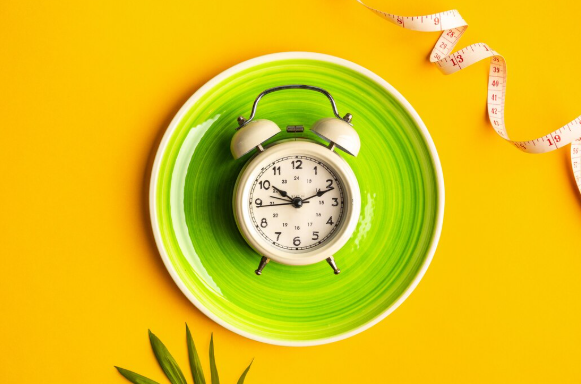
Intermittent fasting has become a popular way to lose weight without the hassle of counting every calorie. Instead of focusing on what you eat, this method focuses on when you eat — and for many people, that’s a lot easier to stick with long-term.
What Is Intermittent Fasting?
There are different styles of intermittent fasting, but one of the most common is time- restricted eating. This approach limits eating to a specific window of time each day — usually around six to eight hours. For example, someone might only eat between noon and 8 p.m., fasting the rest of the day.
What the Research Shows
A recent study led by Krista Varady, a nutrition professor at the University of Illinois Chicago, looked at how well this approach works over an entire year. Her research, published in the Annals of Internal Medicine, found that people who practiced time-restricted eating lost about the same amount of weight as those who counted calories — and kept it off for 12 months. On average, participants lost about 5% of their body weight. That may not sound dramatic, but the key takeaway is consistency: people could actually maintain this routine long-term. “You can basically achieve the same results by counting time instead of counting calories,” says Varady.
The Study Setup Researchers followed 90 adults with obesity and divided them into three groups:
1. Time-restricted eating – could eat only between noon and 8 p.m.
2. Calorie-counting – reduced daily calorie intake by 25%.
3. Control group – made no changes.
After six months of active weight loss, both the fasting and calorie-counting groups entered a “maintenance phase,” which slightly loosened their restrictions to help keep the weight off. By the end of the year, both groups had similar results — about 10–12 pounds lost compared to those who didn’t change their eating habits.
Why It Works
Interestingly, those in the fasting group weren’t told to track calories, but they naturally ate about 400 fewer calories a day — roughly the same amount as the calorie-counting group.
Researchers think this is because people have less time to snack, especially at night. “Most people eat over a 12- to 14- hour period,” says Varady. “Cutting that down by six hours mostly eliminates after-dinner snacking.” Nutrition experts say this “anti-snacking effect” can make a big difference in overall calorie intake without feeling deprived. It may also help regulate hunger hormones and appetite naturally.
Support Makes a Difference
Both the fasting and calorie-counting groups had regular sessions with dietitians for guidance and motivation. According to Dr. Adam Gilden of the University of Colorado, this kind of support plays a huge role in success. He notes that people who try fasting on their own, without coaching or structure, often don’t see the same results.
Simpler Than Calorie Counting?
Tracking calories can be tedious — measuring food, logging meals, and estimating portions. That’s why experts like Courtney Peterson at the University of Alabama say time-restricted eating can be appealing. “For a lot less effort, you can cut your calories by the same amount,” she says.
The Bottom Line
Intermittent fasting isn’t a magic fix or a free pass to eat whatever you want. It simply helps align eating habits with how the body naturally processes food — during daylight hours. As Dorothy Sears of Arizona State University explains: “We’re designed to process nutrients during the day. Avoiding nighttime eating alone can lead to better health outcomes.”
So, what’s the takeaway? Whether you prefer to count calories or count hours, both methods can work. But if you’re looking for a simpler, more sustainable routine, intermittent fasting might be worth a try — especially if you focus on healthy foods and stay consistent.
 Dr. David Hall is the owner of Hall Chiropractic Center. With over 40 years of experience, Dr. Hall is proud to serve the residents of Tega Cay and Fort Mill.
Book a FREE consultation online today!


Sign up for our Sunday Spectator. Delivered to your inbox every Sunday, with all the news from the week.