A York County family whose land sits adjacent to the controversial Silfab Solar manufacturing facility is taking matters into its own hands, pursuing a rezoning that would permanently block warehouses, distribution centers, and heavy manufacturing from ever being built on the remaining 50 acres they still own — and replacing those possibilities with retail shops, restaurants, and medical offices instead.
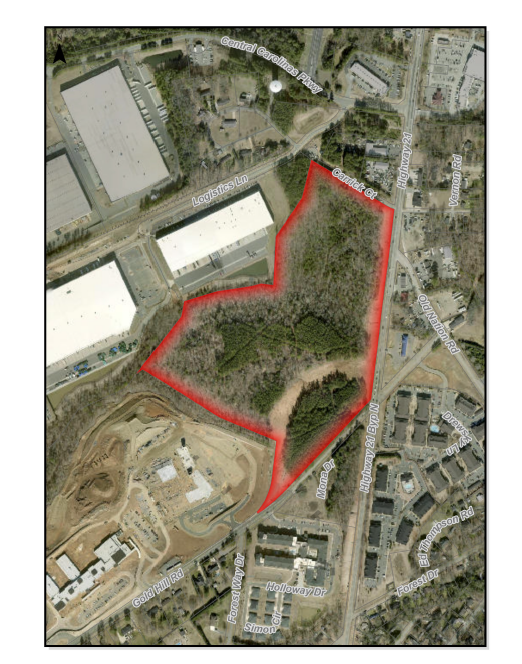
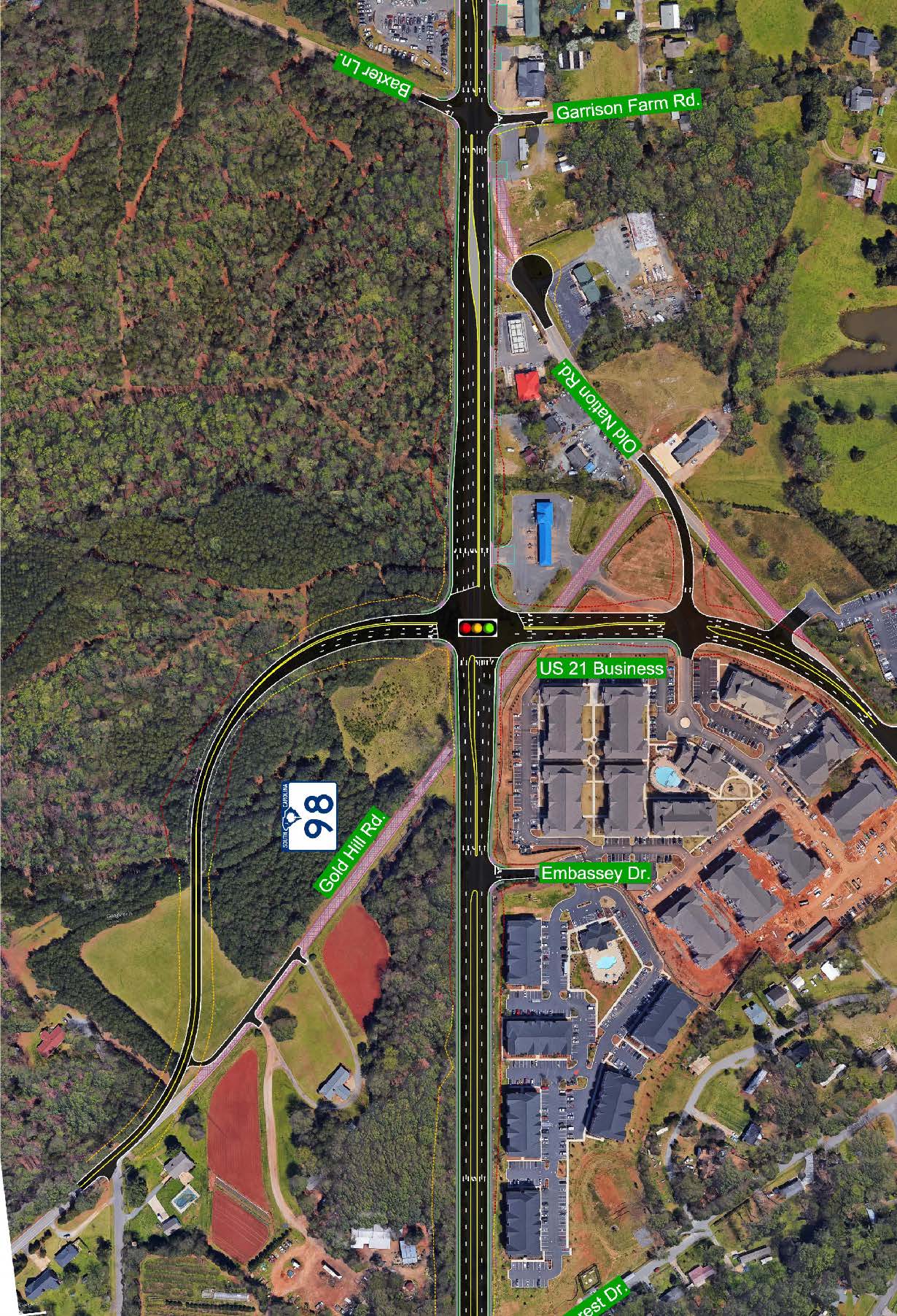
York County Council unanimously approved the first reading Monday night of a rezoning request by the Eubanks family limited partnership to change approximately 50.8 acres at the intersection of Gold Hill Road and Highway 21 from Light Industrial to General Commercial. The vote drew one of the warmest receptions of the evening, with council members expressing gratitude to the family and describing the rezoning as a gift to the surrounding community — one that residents east of Interstate 77 have been waiting years to receive.
The rezoning comes directly against the backdrop of what happened to the northern portion of the same family’s land, which was sold to a developer and eventually became the site of the Silfab Solar facility — a solar panel manufacturing operation that has drawn fierce community opposition over its use of hazardous chemicals and its proximity to Fort Mill schools. The family’s attorney told council Monday that Lee Eubanks, the current owner, is “mortified” by that outcome and is determined to ensure the same thing never happens to the land he still holds.
A Century of Family Stewardship
The history behind the rezoning request is as much a story about a family’s relationship with their land as it is about zoning classifications and land use tables.
The Eubanks family has held this tract, originally part of a larger parcel exceeding 300 acres, for over 100 years. Lee Eubanks’ father, Thomas Hall Eubanks, lived on the property with his wife and farmed it for more than 60 years. He was, by all accounts, a civically engaged citizen — serving on the citizens committee in the 1970s that produced York County’s first-ever zoning ordinance, and cooperating with the county on the installation of a main sewer line across his property at a time when it was badly needed.
In 1992, the elder Eubanks agreed to rezone the property to Light Industrial after being assured by the county that LI was the most flexible zoning available at the time, one that would accommodate the family’s preferred uses including commercial and retail development. That assurance, the family’s attorney Stephen Acra told council, later proved to be undercut by a text change to the zoning ordinance that removed those commercial uses from the LI district without the family’s knowledge or consent. The county, Acra said, made that change without the Eubanks family’s permission.
The Silfab Connection
The family’s determination to pursue the rezoning now is inseparable from what happened to the land they no longer own.
After the elder Eubanks retired, the family had the opportunity to sell a significant portion of the property. Before doing so, Lee Eubanks sold tracts to the Fort Mill School District — one parcel became the site of an elementary school, and Eubanks later donated 28 additional acres to the district to be held as the Thomas Hall Natural Preserve, honoring his great-uncle Tom Hall, the man for whom Tom Hall Street in Fort Mill is named.
He then sold the northern portion of the original 300-acre tract to the Rockefeller Group, a commercial real estate developer, after being assured the land would be developed for warehouses and distribution centers. What he was not told — and what he says he never would have agreed to — was that the building would ultimately be used for manufacturing, specifically the production of solar panels using hazardous chemicals. Rockefeller Group later sold the tract to Exit Development Group, which brought in Silfab Solar as the tenant.
“Lee Eubanks is mortified by what has come about as a result of that manufacturing operation,” Acra told council. “And he thus desires to have his remaining property rezoned to GC so that not only undesirable manufacturing operations would be prohibited on this 50 acres, but also warehouse and distribution centers would be prohibited, thereby eliminating heavy truck traffic.”
The Silfab facility has become one of the most contentious issues in York County in recent years. The plant sits near Fort Mill schools and has drawn sustained community opposition over its handling of toxic chemicals, its proximity to residential areas, and, as heard again Monday night from a public forum speaker, ongoing questions about whether it ever received proper zoning compliance approval from the county in the first place. That last concern was raised again at the April 6 meeting by Kate Hanower, who directly challenged the county to produce a lawful zoning compliance approval document for the facility.
What General Commercial Would Allow — and Prohibit
The family’s rezoning request is designed not just to change what is permitted on the land in general terms, but to set in motion a specific set of privately enforceable restrictions that will outlast any future rezoning.
Acra told council that if the GC rezoning is approved, Lee Eubanks intends to immediately record a declaration of restricted covenants running with the land — meaning they would be binding on any future owner regardless of what happens to the zoning in years or decades to come. Those covenants would prohibit light and heavy manufacturing, warehouse and distribution centers, and certain uses that are technically permitted in GC as special exceptions or conditional uses, including adult businesses, transitional housing, emergency shelters, and similar operations.
Acra was careful to note — invoking the name of the late County Attorney Michael Kendry, who had counseled him on the matter many times — that the covenants are not a condition of the rezoning itself, since conditional rezoning is not recognized under South Carolina law. Rather, the recording of the covenants would be conditioned upon the rezoning being approved, making them a private contractual mechanism rather than a zoning condition.
What would be permitted under GC includes the retail stores, restaurants, and medical offices the family has always envisioned for the property. Acra described Lee Eubanks’ vision as a mixed-use business park serving the thousands of residents east of I-77 who currently must cross the interstate to access basic goods and services. “GC would permit the kind of retail, medical office, and restaurant use that is much needed in the area,” he told council.
School District Supports the Rezoning
The Fort Mill School District, which has been among the most vocal institutional voices opposing the Silfab Solar facility’s presence near its schools, submitted a letter of support for the Eubanks rezoning. Acra told council that Superintendent Gray Young submitted a letter stating that the Fort Mill School District Board of Trustees voted unanimously to support the rezoning request.
The school district’s position reflects a broader community desire to see the land immediately surrounding the Silfab site developed in a way that would not add to industrial activity in the area, and that would instead bring retail amenities closer to a rapidly growing residential population that has long lacked convenient access to everyday services on the eastern side of I-77.
Council Reacts With Gratitude
The reaction from council was notably warm, standing in contrast to the more guarded discussions that characterized other items on the agenda.
“You have given the community a much-needed gift,” one council member told Acra, directing the comment toward Lee Eubanks through his attorney. “I have expressed this to you before, to tell Mr. Eubanks that we are indebted to him. I have had so many people call me, email me — I cannot tell you how happy they are. It is a breath of fresh air.”
Another council member said simply, “I certainly support this and appreciate the applicant’s request,” before the motion carried unanimously without further debate.
Planning Commission had also unanimously recommended approval of the rezoning prior to Monday’s council vote, and the case presented no opposition speakers during the public hearing.
A Note on the Public Hearing
Council disclosed at the start of the public hearing that the notice published for the case contained an error. As a result, a corrected public hearing will be held at the third reading, currently scheduled for May 4, 2026. Monday’s first reading proceeded as a preliminary vote, with the corrected public hearing providing a full additional opportunity for community input before final council action. Two more readings are required before the rezoning becomes effective.
What It Means for the Community
If the rezoning is ultimately approved and the restricted covenants are recorded as planned, the 50 acres at Gold Hill Road and Highway 21 would become one of the most tightly controlled commercial parcels in the county — prohibited by private covenant from ever hosting the industrial uses that have made the adjacent Silfab property such a source of community conflict.
For residents of the growing neighborhoods east of I-77 near Fort Mill, the prospect of retail shops, restaurants, and medical offices on the site represents a significant quality-of-life improvement, eliminating the need to navigate interstate interchange traffic for routine errands. For the Eubanks family, it represents the restoration of a vision for their land that dates back generations — and a determination, born of painful experience with the Silfab outcome, to ensure that what happened to the northern tract never happens again.

Sign up for our Sunday Spectator. Delivered to your inbox every Sunday, with all the news from the week.