
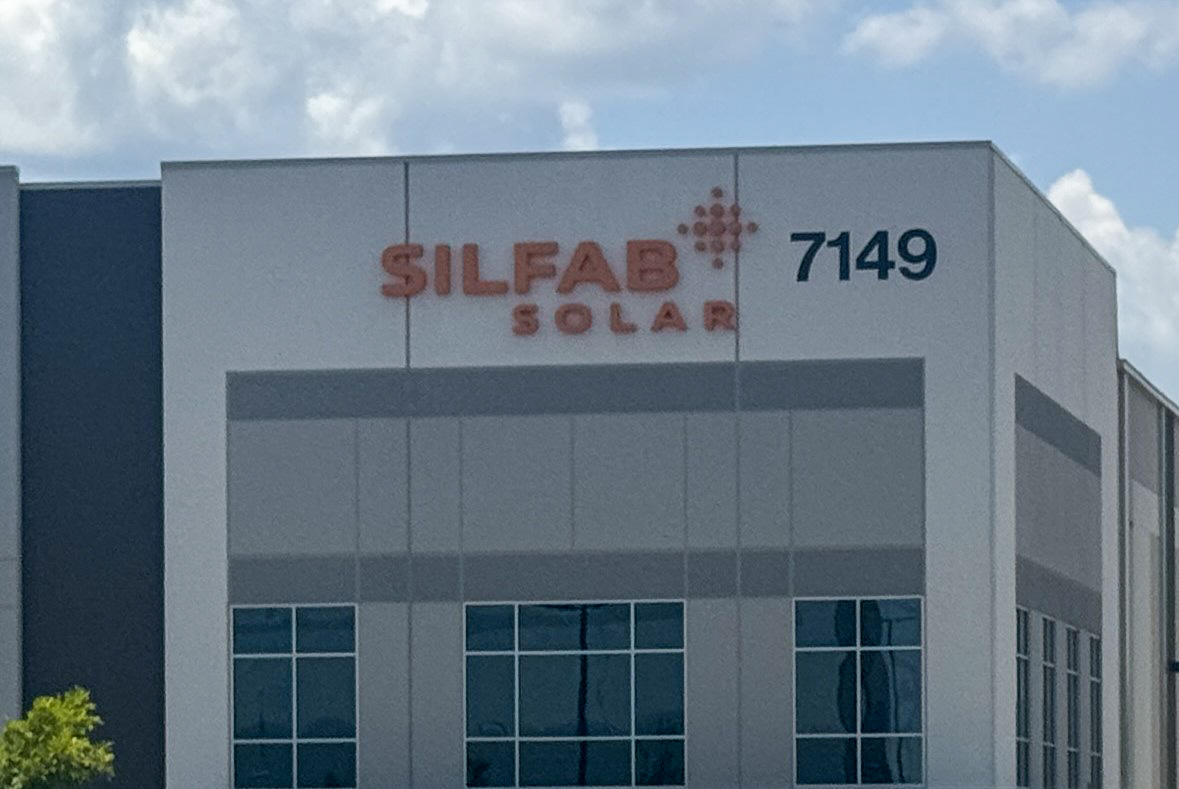
YORK COUNTY, S.C. – A South Carolina Circuit Court judge has dismissed a lawsuit filed by a local property owner seeking to halt the construction and operation of the Silfab Solar manufacturing facility in Fort Mill.
In an order filed Wednesday morning, Judge G.D. Morgan Jr. dismissed with prejudice the complaint brought by plaintiff Dennis Floyd Bivins against York County and several of its officials. The court ruled that Bivins lacked the legal standing to bring the suit and had failed to follow proper administrative procedures to challenge the solar project.
County Response: “Reckless” Assertions Refuted
In a press release issued shortly after the ruling, York County officials characterized the dismissal as a vindication of their siting and permitting processes.
“The Court confirmed the propriety of the actions of the County and Zoning Administrator,” the County stated, noting that the order “refutes the reckless, incorrect assertions by some that Council’s vote on the Inducement Ordinance was illegal.”
The County highlighted that the judge’s order validated the significance of the Inducement Ordinance and the Fee in Lieu of Tax (FILOT) Agreement—measures passed by the County Council in September 2023 to bring Silfab to the area. Officials emphasized that the court’s decision “directly dispels recent public assertions that the County approved a zoning change” for the property, reaffirming that the Council lawfully followed three readings and a public hearing to pass the legislation.
Acknowledging the intense public sentiment surrounding the factory, the County’s statement urged citizens to be “respectful in their disagreement” and to avoid using social media to impugn the character of Council members and staff.
Lack of Standing and “Speculative” Harm
The lawsuit, originally filed in the Court of Common Pleas, sought injunctive relief, a declaratory judgment, and writs of mandamus to force the County to issue stop-work orders or revoke permits for the Silfab facility located at 7149 Logistics Lane. The plaintiff argued that the facility posed health and welfare risks and alleged that the project’s approval involved “spot zoning”.
However, the Court found that the plaintiff failed to demonstrate “special damages”—a legal requirement showing that he would suffer a particularized injury distinct from the general public.
“Plaintiff offers only a conjectural and generalized grievance concerning future public health and welfare concerns,” Judge Morgan wrote in the order. The judge noted that the alleged injuries were “impermissibly speculative” and “hypothetical,” as the facility is not yet fully operational.
Failure to Exhaust Remedies
A central pillar of the dismissal was the finding that the plaintiff failed to challenge the project through the appropriate administrative channels when the approvals were first issued.
York County’s zoning office issued a “Zoning Compliance Verification” for the Silfab project in December 2022, confirming the site’s Light Industrial zoning was compatible with Silfab’s operations. The court noted that no appeal was filed at that time.
“Because there is a specific procedure to challenge an administrative agency decision, compliance with such procedure is a condition precedent for judicial review,” the order stated. By failing to appeal the initial zoning verification or subsequent permits within the required 30-day window, the plaintiff failed to “exhaust his administrative remedies,” barring him from seeking relief in court now.
Procedural Arguments Rejected
The court also rejected the plaintiff’s technical argument that the construction permits were invalid because they allegedly lacked the specific written signature of the York County Zoning Administrator.
Judge Morgan clarified that county regulations authorize staff members to issue such verifications and do not require a specific signature from the administrator for every permit. Furthermore, the court pointed out that the York County Council had effectively ratified these administrative actions when it passed an inducement ordinance and a “Fee in Lieu of Tax” (FILOT) agreement for Silfab in September 2023.
Ongoing Legal Battles
While this specific lawsuit has been dismissed and cannot be refiled, it is part of a broader legal conflict surrounding the Silfab project.
The court’s order referenced separate, ongoing litigation involving the Citizens Alliance for Government Integrity (CAGI), a non-profit that also sued Silfab and York County in late 2024. That lawsuit, along with a related appeal regarding a May 2024 Board of Zoning Appeals (BZA) decision, is currently stayed pending further legal resolution.
Silfab Solar and Residents Face Off in Fort Mill Zoning Appeal
Unlike the BZA decision—which later questioned whether solar manufacturing was a permitted use—the court noted that the 2022 Zoning Compliance Verification specific to Silfab was never appealed and remains a ratified action of the County Council.
The court concluded that issuing stop-work orders is a discretionary government function, not a mandatory duty that a judge can force a county to perform. Consequently, the motion to dismiss was granted, effectively ending this specific legal challenge to the development.

Sign up for our Sunday Spectator. Delivered to your inbox every Sunday, with all the news from the week.