

By Hannah Shifflette, Rural Health and Nutrition Extension Agent
Clemson Cooperative Extension, Clemson University
The holidays are almost upon us! We will be traveling, spending time with family, and enjoying plenty of food. Then what comes next? We contemplate our New Year’s resolutions, of course! For someone with diabetes, now is a perfect time to get on track with your diabetes self-management. You can reduce your risk of complications and improve your overall health in 2027. Here are three simple lifestyle changes that you can make this coming year to help better manage your diabetes:
Get Moving
One of the most common New Year’s resolutions for people, no matter their health status, is to exercise more. Physical activity is a crucial part of diabetes self-management, as it not only supports reaching and maintaining a healthy weight, but also helps lower blood sugar levels. However, don’t feel like you need to run two miles each day. Instead, start slowly and seek guidance from your doctor before starting anything new. To start, try to reduce the amount of time you are sedentary by getting up and moving every 30 minutes. Most adults should aim to engage in around 150 minutes of aerobic activity, spread throughout the week, for maximum health benefits. You can also consider adding strength and flexibility exercises to your routine two to three times per week.
Reevaluate Your Eating Habits
Diet has a significant impact on your diabetes management, so strive to make that impact positive by eating healthy meals and snacks. Aim to incorporate whole grains, fruits, vegetables, and lean protein into your meal plan, while limiting foods high in added sugars, sodium, and unhealthy fats. Swapping sugary drinks for water can also improve your diet by drastically reducing your sugar intake, so make that switch when possible. Also, be sure to keep an eye on portion sizes and read the nutrition facts labels on packaged products that you consume. To learn even more about how your diet affects your diabetes, consult with a Registered Dietitian.
Seek Support
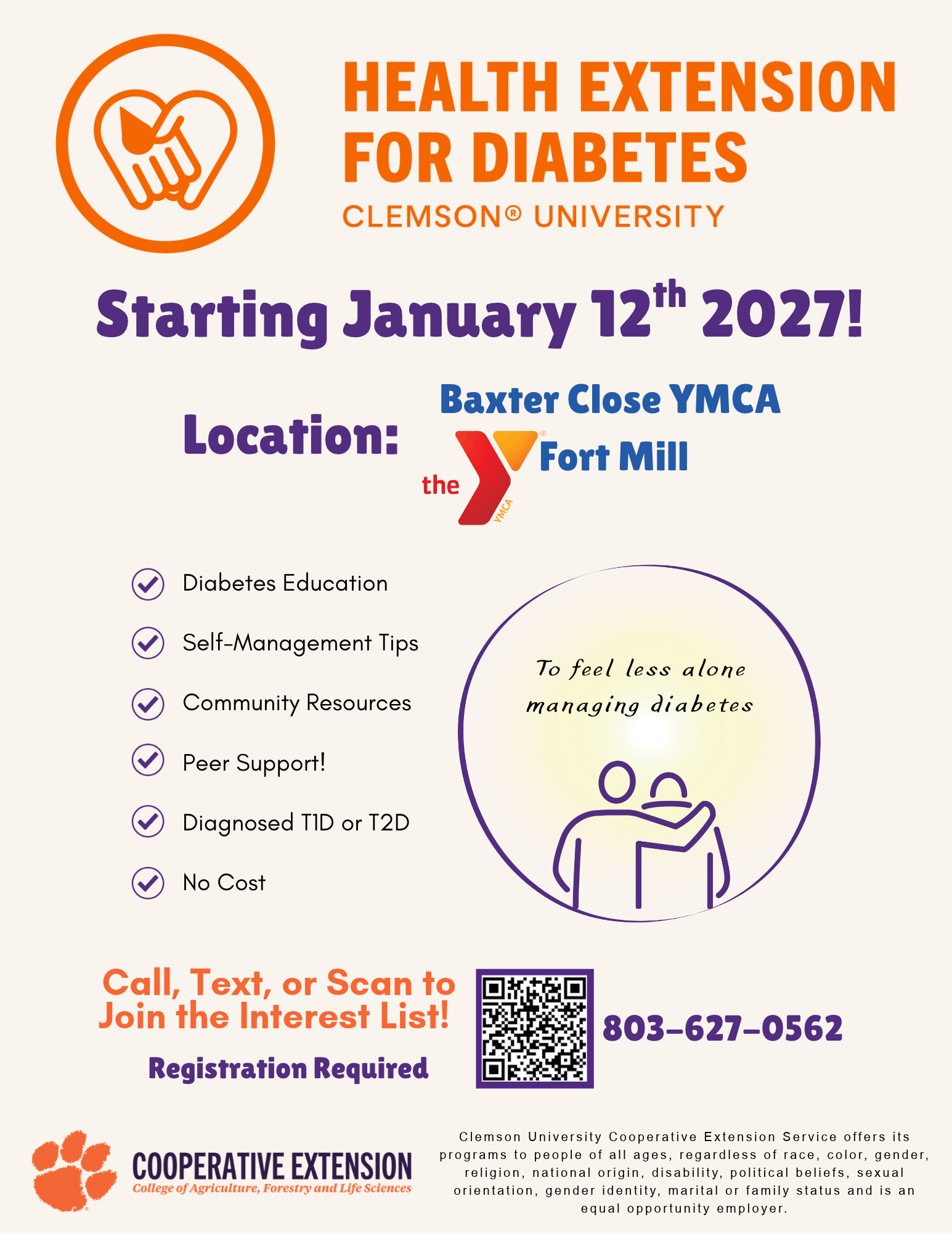
Beginning a new year often brings on new feelings of hope and determination, but it can also bring on feelings of stress when thinking about your diabetes diagnosis. If stress is not well managed, your blood sugar levels can become elevated, making your diabetes more difficult to control. Surrounding yourself with support during your diabetes self-management journey is key. Diabetes self-management support programs are a great way to increase your knowledge and help you feel less alone while managing diabetes. Clemson Extension’s free Health Extension for Diabetes program provides education and support to those living with type 1 or type 2 diabetes. Health Extension for Diabetes classes are offered virtually or in person to all South Carolina residents with a diabetes diagnosis. A new in-person group will begin in Fort Mill in January 2027. Visit https://clemson.ca1.qualtrics.com/jfe/form/SV_07gV9gl3ZHOAohU to join the interest list or contact Health Extension Agent, Hannah Shifflette, at 803-627-0562.
Make your health a priority this New Year and set a goal to take control of your blood sugar. Start with one of the three healthy lifestyle changes mentioned and discuss it with your doctor. Incorporating these small changes now can lead to big changes down the road that you’ll thank yourself for, each New Year to come.
Hannah Shifflette is a Clemson Extension Rural Health and Nutrition Agent who is committed to fostering better health in Chester and York Counties.
Clemson University Cooperative Extension Service offers its programs to people of all ages, regardless of race, color, gender, religion, national origin, disability, political beliefs, sexual orientation, gender identity, marital or family status and is an equal opportunity employer.

Sign up for our Sunday Spectator. Delivered to your inbox every Sunday, with all the news from the week.

Thomas Hyslip lives in Tega Cay with his wife and daughter. After 27 years in the U.S. Army and Federal Law Enforcement, he retired to pursue his passion for teaching. Tom is now an Assistant Professor of Instruction at the University of South Florida. In 2 short years he has won 10 awards from the South Carolina Press Association, including first place in column writing, education beat reporting and best podcast.