
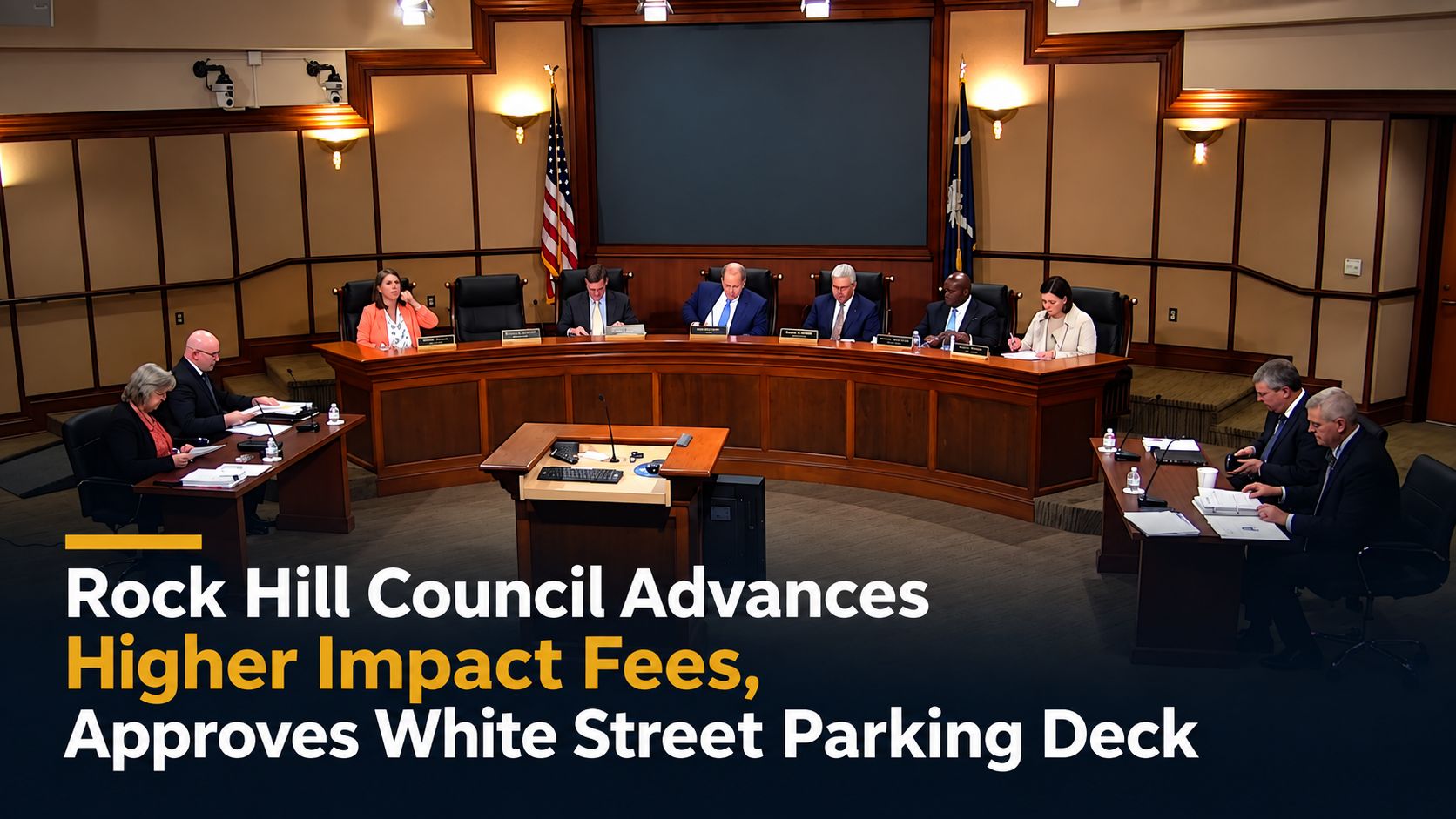

Rock Hill City Council on Monday, Sept. 28, gave first reading to ordinances that would sharply raise the fees builders pay on new construction and create the city’s first police impact fee. Council also approved a contract for a downtown parking deck and advanced a larger land sale to Novant Health on Palmetto Parkway.
Impact fees are charged when a building permit is pulled and can only pay for capital projects tied to growth, such as new stations, plants and pipes. They cannot be used for maintenance or personnel. The fees apply to new development only, not existing homes.
Impact fees
City staff said the 2026 capital improvements plans and impact fee studies set the maximum fee the city can legally justify based on growth over the next 10 years. Rock Hill first adopted impact fees in 2003 and last updated them in 2016. After a public hearing in which no one spoke, council adopted the Planning Commission’s resolution recommending the studies, then gave first reading to three ordinances.
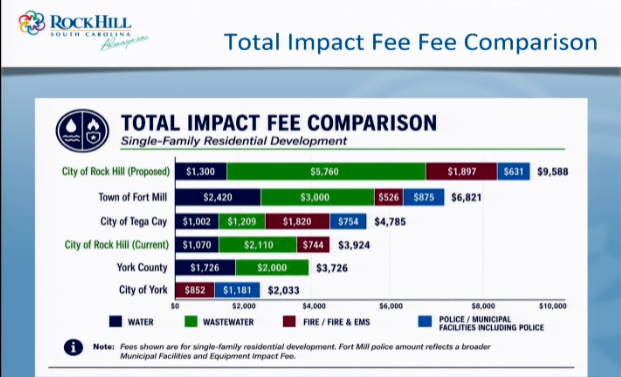
The largest increase is for wastewater, where the fee per residential unit would rise from $2,110 to $5,760. Staff said the wastewater plan calls for nearly $670 million in projects over 10 years, including work on Red River Road, with about $570 million tied to growth. The water fee would rise from $1,070 to $1,300. Staff said the smaller jump reflects the water plant’s recent expansion from 36 million to 48 million gallons a day.
The single-family fire fee would climb from $744 to $1,897, largely to fund Fire Station No. 7, which staff said is needed to protect the city’s ISO rating. The city last built a fire station in 2010.
The new police fee would be $631 for a single-family home and $298 for a multifamily unit, with commercial and industrial rates based on square footage. It would help pay for a new 36,000-square-foot police headquarters and a warehouse, estimated at $36 million. The current headquarters dates to 1977. Only half that cost can be attributed to growth.
Staff proposed a Jan. 1 effective date, but council will set the date when the ordinances return for second reading. Council members said Rock Hill’s fees have long trailed nearby communities and that growth should pay its own way rather than falling on current taxpayers through the millage rate. Road improvements were studied but left out because state law limits road impact fees to new high-capacity roads, and one council member urged residents who want better roads to call their state representative.
Parking deck and Novant
Council awarded a contract to Leitner Construction Company of the Carolinas, the low of three bidders, to build a parking deck between the Wells Fargo building and White Street. The design echoes the deck going up at The Herald site, and both are built to receive a future pedestrian bridge. The city will pay with about $5.2 million in existing funds, roughly $2.5 million in tax credits and tax increment financing. Construction likely will not start until next summer.
Council gave first reading to an amendment adding about 10 acres to the Novant Health site on Palmetto Parkway, bringing it to about 35 acres at the same price per acre, and to a rezoning of that land from Industry General to Master Planned Commercial. A public hearing on the rezoning is still to come.
Other business
Council also approved a revised textile mill site designation for Rock Hill WF LLC, closed an additional portion of Aspendale Road tied to the International Drive industrial park, extended the Independence Soccer Club partnership with an option for a 10-year term if the club funds facility improvements, approved a Piedmont Medical Network sponsorship of the Trail at Riverwalk and renewed the municipal judge’s contract through September 2028. The consent agenda included final adoption of a 0.65-acre rezoning on Crawford Road to Neighborhood Commercial.
The impact fee ordinances, Novant amendment and rezoning return for second reading at a future council meeting.
Sign up for our Sunday Spectator. Delivered to your inbox every Sunday, with all the news from the week.

Thomas Hyslip lives in Tega Cay with his wife and daughter. After 27 years in the U.S. Army and Federal Law Enforcement, he retired to pursue his passion for teaching. Tom is now an Assistant Professor of Instruction at the University of South Florida. In 2 short years he has won 10 awards from the South Carolina Press Association, including first place in column writing, education beat reporting and best podcast.